
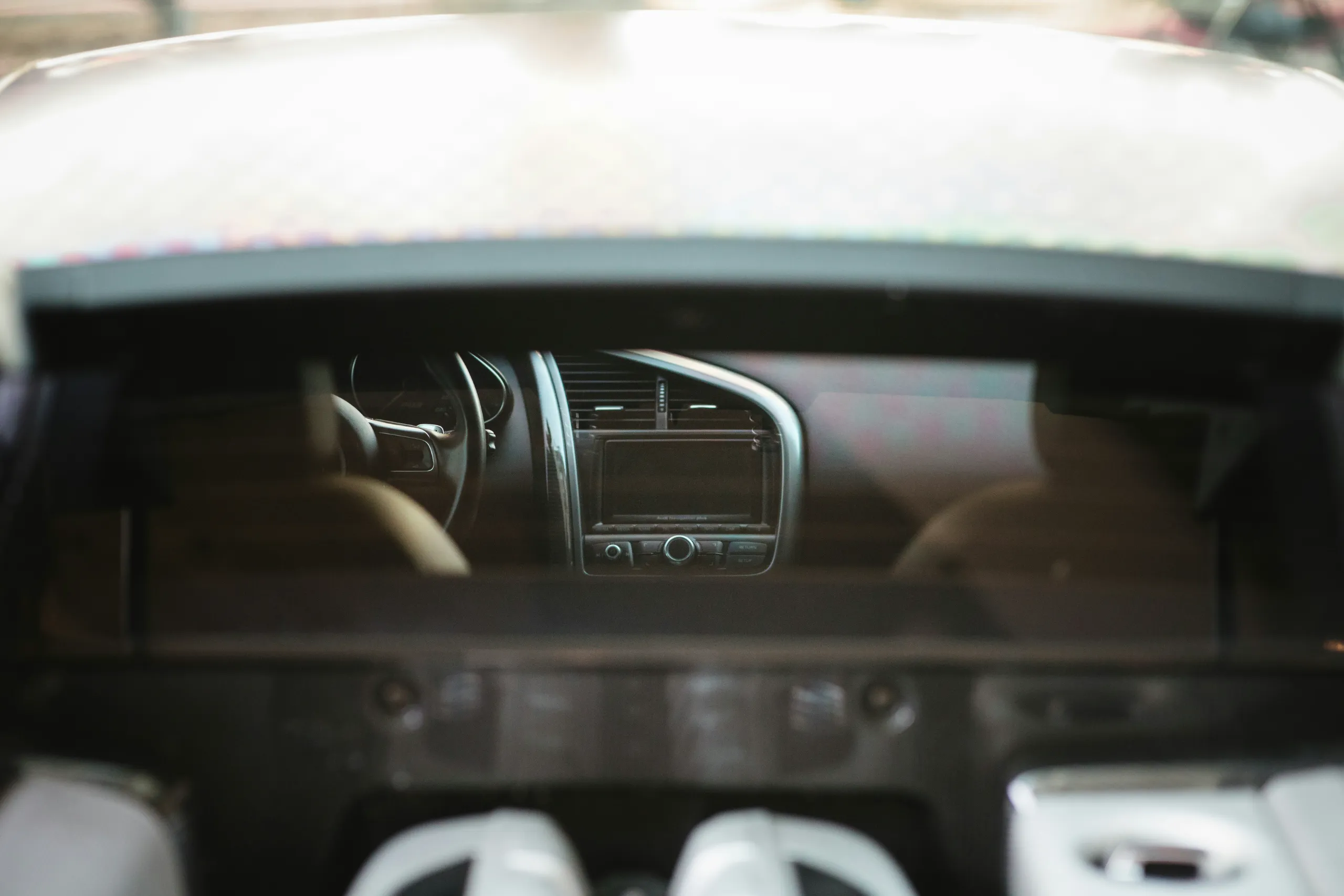
Automotive Sunroof Sunshade Motor Integration Technology: A Complete Guide
Modern vehicles are increasingly defined by the comfort and convenience features they offer, and few features are as appreciated as a power sunroof with an integrated sunshade. The seamless operation of opening a glass roof or retracting a sunshade is the result of sophisticated engineering that integrates motors, sensors, control units, and vehicle communication networks. This guide provides a comprehensive overview of automotive sunroof sunshade motor integration technology, covering system architecture, key components, communication protocols, safety features, and emerging market trends.
Understanding the System Architecture
The electrical system of a modern sunroof with a power sunshade is a carefully orchestrated network of components working together to provide smooth, reliable, and safe operation.
Master-Slave Configuration
The sunroof electrical system typically uses a master-slave configuration utilizing a LIN-Bus (Local Interconnect Network) based system for communication. The Body Control Module (BCM) is designated as the master, while the sunroof and sunshade control modules are configured as the slaves.
As the system master, the BCM uses the LIN-Bus communication bus to:
- Enable or disable sunroof and sunshade operation
- Communicate vehicle information to each controller
- Request sunroof or sunshade movement
- Receive system status and diagnostic information from the controllers
This architecture allows for centralized control while distributing specific motor control functions to dedicated modules.
Integrated Motor-Controller Units
The sunroof glass and power sunshade are each controlled by their own integrated motor/controller unit. These units contain:
- The electric motor
- Necessary control electronics
- Hall effect position sensors
- Interface to driver control switches
Each motor/controller is capable of controlling motion based on control switch activation and LIN-Bus message commands from the system master.
Key Insight: The integrated motor/controller used for glass control and for power sunshade control are actually the same physical part. In dual-pane systems, these units are interchangeable and can configure themselves to either sunroof or sunshade operation through a configuration pin in the wiring harness.
Key Components of the Sunshade Motor System
Motor Types and Specifications
The electric sunshade motor is a specially designed actuator used for the automatic deployment and retraction of internal sunshades in automobiles. This type of motor is a micro-motor, typically installed above the front windshield of the car.
Common Motor Types:
- DC Motors: Widely used for their simplicity and cost-effectiveness
- Stepper Motors: Offer precise control and position accuracy
Typical Specifications:
| Parameter | Typical Range |
|---|---|
| Operating Voltage | 9-16V |
| Temperature Range | -40°C to +85°C |
| Torque Options | 7.5 Nm, 9.5 Nm, 11.5 Nm |
| Rated Output Power | Up to 12W (max) |
| Rated Voltage | 14.5V |
| Restraint Load Torque | 5 Nm |
Control Electronics and Sensors
Hall Effect Position Sensors: These sensors provide precise position feedback, allowing the motor controller to determine the exact location of the sunshade at all times.
Limit Switches: Used to detect when the sunshade has reached its fully deployed or fully retracted position, preventing motor overload.
Control System: Responsible for receiving operational signals and controlling the start, stop, and speed adjustment of the motor. This may include relays, electronic controllers, and sensors.
Mechanical Transmission Components
The motor’s rotation is transmitted to the sunshade through mechanical transmission mechanisms such as gears or belts, achieving the smooth lifting and lowering of the sunshade.
Key mechanical components include:
- Reduction Gearbox: Reduces motor speed and increases output torque for smoother control
- Right Angle Drive and Gear Reduction Transmission: Connects the motor mechanically to the sunroof or sunshade drive gear
- Bearings: Support the rotor, reduce friction, and ensure smooth operation
Communication Protocols and Network Integration
Modern sunroof systems integrate seamlessly with the vehicle’s body control network using standardized communication protocols.
LIN-Bus Communication
The Local Interconnect Network (LIN-Bus) is the primary communication protocol used in sunroof systems. Key aspects include:
- Master-Slave Topology: The BCM acts as the master, sending commands to the sunroof and sunshade controllers
- Message-Based Control: Controllers execute motion based on LIN-Bus message commands
- Diagnostic Reporting: Controllers provide system status and diagnostic information back to the BCM
- Calibration Loading: Operational calibrations for the integrated motor/controller are loaded over the LIN-Bus by the BCM
The sunroof motor assembly, sunshade motor assembly, and BCM transmit and receive signals through LIN communication.
CAN-Bus Integration
For more advanced systems, the Controller Area Network (CAN) bus provides higher-speed communication and greater functionality.
- CAN-FD Support: Modern controllers support CAN-FD (Flexible Data-rate) for higher bandwidth
- System Integration: The motor control module exchanges control signals, status updates, and diagnostic information with other ECUs in the vehicle via the CAN bus
- Enhanced Diagnostics: CAN bus enables more comprehensive diagnostic capabilities
Renesas describes a sunroof control system that “integrates seamlessly with the vehicle’s body control network using CAN or LIN communication protocols,” prioritizing safety, optimizing energy usage, and ensuring a compact, durable architecture.
Control Logic and Safety Features
Anti-Pinch Function
The anti-pinch function is a critical safety feature that prevents injury or damage when the sunshade is closing.
How It Works:
- The sunshade motor assembly monitors sunshade conditions using signals from the motor
- When an interruption is detected during auto close operation, the motor reverses direction
- The sunshade opens by 150 mm (5.91 in) or more
- If the distance between the pinching position and the fully-open position is less than 150 mm, the sunshade reverses to the fully-open position
Important Note: The anti-pinch function does not operate if initialization setting has not been performed.
Automatic Operation and Initialization
Automatic Operation:
- The sunroof and sunshade operate automatically by operating the sunroof switch assembly
- During automatic operation, operating the switch again will stop the automatic operation
Initialization/Teach Process:
- If initialization is not performed, the automatic function does not operate
- The initialization process teaches the motor the physical limits (hard stops) of the sunshade travel
- Soft stop locations are established several millimeters ahead of the hard stops
Retained Power Function
The retained power function allows the sunroof system to operate for a period after the ignition is turned off.
Integration Challenges and Design Considerations
Integrating sunroof sunshade motor systems presents several engineering challenges:
Market Trends and Future Developments
Market Growth Projections
The automotive electric sunshade and sunroof market is experiencing significant growth:
| Market Segment | 2025 Value | 2031/2033 Projection | CAGR |
|---|---|---|---|
| Automotive Power Sunshade Actuator | $362 million | $673 million (2031) | 10.9% |
| Automotive Electric Sunshade | $1.95 billion | $3.28 billion (2031) | 9.0% |
| Automotive Electric Sunroof Sunshade | $1.28 billion | $2.35 billion (2031) | 9.6% |
| Automotive Sun Shades (Overall) | $3.48 billion | $5.0 billion (2035) | 3.7% |
Emerging Technologies
1. Smart Motor Controllers
Toshiba has introduced the SmartMCD™ TB9M001FTG, a highly integrated device specifically designed for efficient and precise control of brushed DC motors in automotive applications, including power sunroofs. The device integrates four low-side drivers that function as relay drivers, enabling forward and reverse control of two brushed DC motors.
2. Software-Defined Vehicle Edge Nodes
NXP’s S32M2 is a purpose-built motor control solution for software-defined vehicle edge nodes, optimizing applications like sunroof and seat position control.
3. AI-Enabled Sunshades
Breakthroughs in ultra-low-power stepper motors and edge-AI algorithms enable sunshades to autonomously adjust based on real-time cabin temperature and solar intensity.
4. Solar Integration
With the growing emphasis on environmental protection and energy conservation, electric sunroof sunshade designs are beginning to incorporate solar technology, with some premium brands adopting this approach.
5. Advanced Materials
Key innovations in materials science, such as lightweight composites and electrochromic glass, have unlocked new design possibilities while improving energy efficiency and durability.
Frequently Asked Questions (FAQ)
What is the difference between a sunroof motor and a sunshade motor?
While they are often the same physical part, they serve different functions. The sunroof motor controls the glass panel, while the sunshade motor controls the retractable shade. In modern systems, both use integrated motor/controller units that can configure themselves for either function.
How does the anti-pinch function work?
The anti-pinch function uses motor current monitoring or hall effect sensors to detect an obstruction during closing. When an interruption is detected, the motor reverses direction and opens the sunshade by at least 150 mm (5.91 in) to prevent injury or damage.
What communication protocols are used in sunroof systems?
Modern sunroof systems primarily use LIN-Bus for communication between the BCM and motor controllers. More advanced systems may also use CAN-Bus or CAN-FD for higher-speed communication and enhanced diagnostics.
Why does my sunshade not operate automatically after a battery disconnect?
The motor/controller may need to be re-initialized or “taught” after a power loss. The initialization process teaches the motor the physical limits of the sunshade travel. Without initialization, automatic functions and anti-pinch protection may not work.
What is the typical lifespan of a sunshade motor?
With proper design and quality components, sunshade motors are designed to last the lifetime of the vehicle. Key factors affecting lifespan include bearing quality, operating temperature, and usage frequency.
How are sunshade motors protected from the environment?
Sunshade motors are housed in durable enclosures with waterproof, dustproof, and corrosion-resistant characteristics. The AUMOVIO Sunroof Module, for example, offers IP52 protection and operates reliably between -40°C and +85°C.
Conclusion
Automotive sunroof sunshade motor integration technology represents a sophisticated blend of mechanical engineering, electronics, and software control. From the master-slave architecture using LIN-Bus communication to the critical safety features like anti-pinch protection, every component is designed to deliver a seamless, reliable, and safe user experience.
The market for these systems is growing rapidly, driven by consumer demand for comfort and convenience features. Emerging technologies such as AI-enabled sunshades, solar integration, and advanced motor controllers promise to make these systems even more intelligent and efficient in the coming years.
For automotive engineers and system designers, understanding the intricacies of sunroof sunshade motor integration is essential for developing next-generation vehicles that meet evolving consumer expectations for comfort, safety, and sustainability.
About the Author
Qamar Shahzad is a staff writer and technology researcher at TB Staff. He covers broadband infrastructure, digital transformation, technology policy, and the companies and platforms shaping the digital landscape. Qamar Shahzad is committed to delivering clear, accurate, and practical insights to help readers understand how technology impacts their communities and daily lives.



Leave a Reply